
How AI Is Rewriting the Search Rules for Banks
For the BFSI industry, 2026 will be the year things start getting serious for financial services branding. From banks to insurers and from mortgage lenders to investment advisory firms, AI SEO for financial services has become a reality. Google AI Overviews banking has revolutionized the way people find answers to everything from mortgage interest rates to personal credit scores, all right there on the SERP without a single click.
Ranking for keywords alone is no longer enough. The rules of search have changed, and the competitive edge now lies in AI-driven strategies. If you’re a bank, the real question in 2026 isn’t whether you’ll adopt an AI search strategy. It’s how quickly you’ll implement one.
How AIO Is Affecting Financial Services Traffic
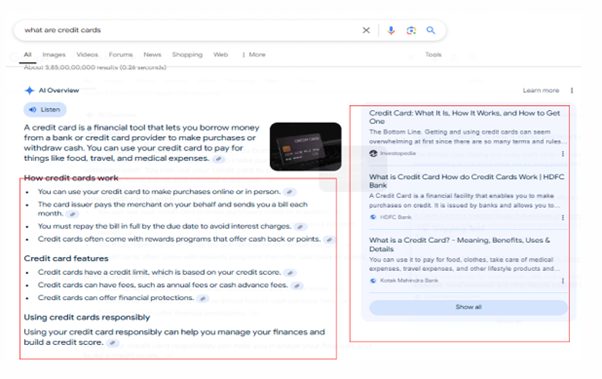
The emergence of AIO is reshaping discovery in financial services. Google is now answering financial queries directly on the search page, meaning users get what they need without ever visiting a website.
The zero-click reality for banks and lenders
When someone searches “best savings account rates” or “how to refinance my mortgage,” Google AIO for banks serves a ready answer at the top. For BFSI brands, this means pages that once pulled thousands of monthly visitors are seeing steady declines.
Which financial queries are triggering AIO?
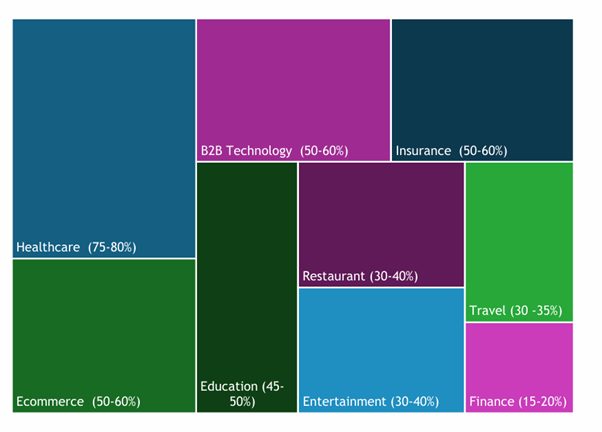
Informational questions are the ones most disrupted by AI Overviews. When someone searches for a financial query, Google often provides the full answer directly instead of sending the user to a bank or financial site. This means fewer clicks for financial brands and less traditional search traffic overall. This is how the real SGE banking SEO impact looks like in practice.
E-E-A-T: Why It Matters More Than Ever for BFSI Blogs
Poor advice can impact lives. Google understands this. And therefore, classifies financial content as YMYL which means Your Money or Your Life. For BFSI brands, E-E-A-T for financial blogs is not a nice-to-have. It is the baseline Google uses to decide whether your content is even worth surfacing.
Demonstrating experience and trust in financial content
Financial blogs are dedicated to investment advice, loans, and tax tips, which are issues that could cost readers money if incorrect information is presented to them. The Search Quality Rater Guidelines established by Google apply additional strictness to these sites. Your content needs to reflect genuine expertise, not just keyword coverage.
Author authority and structured signals for AI inclusion
Consumer trust drives conversion in financial services. If a reader doesn’t trust the source, they won’t act. The name of the authors verified credentials, and structured data for AI search are all relevant to both Google and the AI models, deciding what gets cited.
AI SEO vs Traditional SEO : What’s Different for Financial Brands?
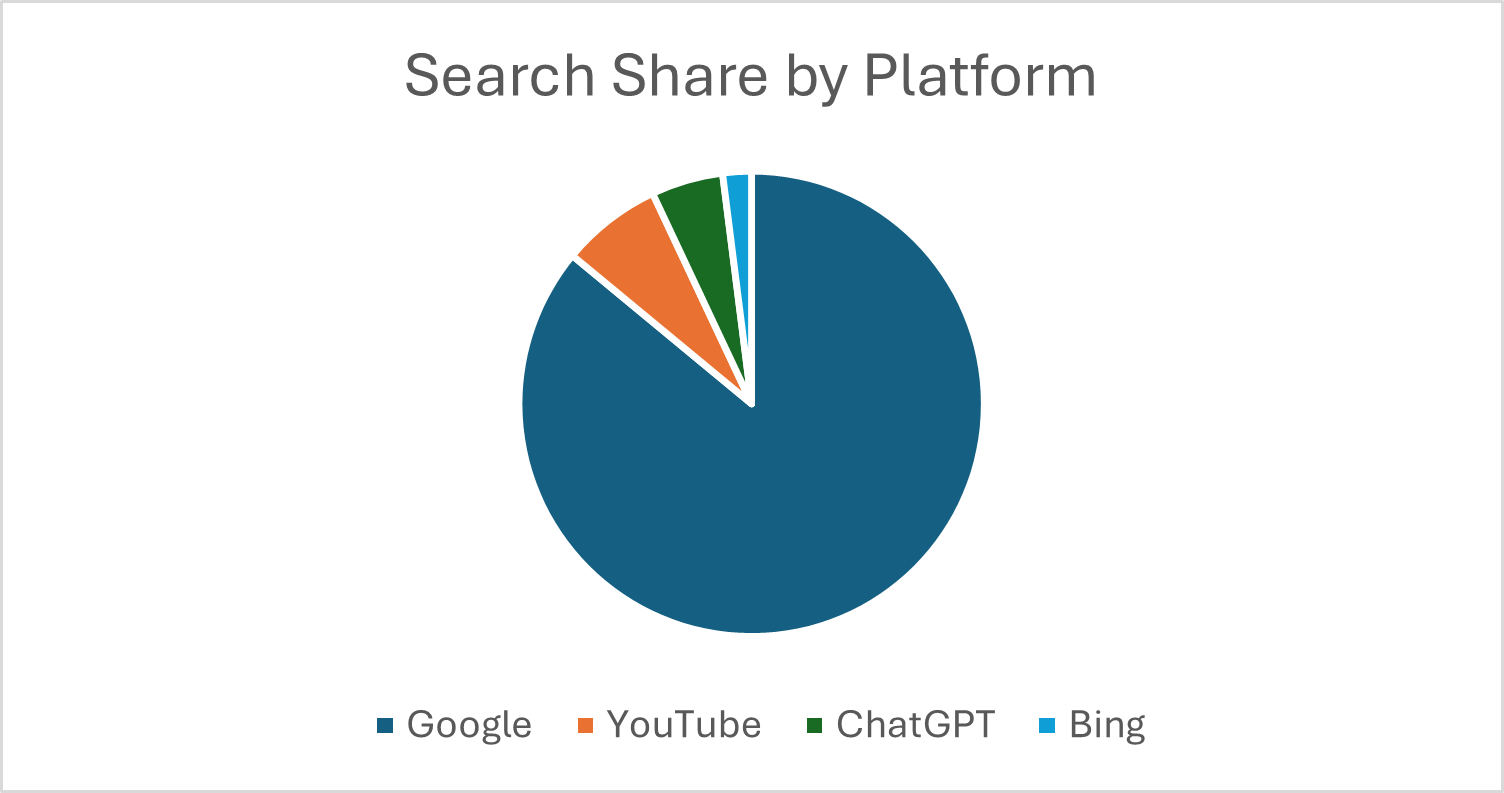
Shifting from traditional SEO to AI SEO has been a fundamental transformation for customers, deciding how customers search for and find banking, lending, and insurance content. While traditional SEO focused on ranking keywords and driving clicks, AI-driven search experiences such as Google’s AI Overviews and search generative experience (SGE) are changing the way discovery works.
Here’s a comparison between the two.
| Aspect | Traditional SEO | AI SEO |
| Traffic flow | Users click on SERP’s to reach financial sites | Answers appear directly in search results. |
| Content focus | Keyword density and backlinks were driving rankings | Authority, trust, and E-E-A-T signals are important for content to surface in AI overviews. |
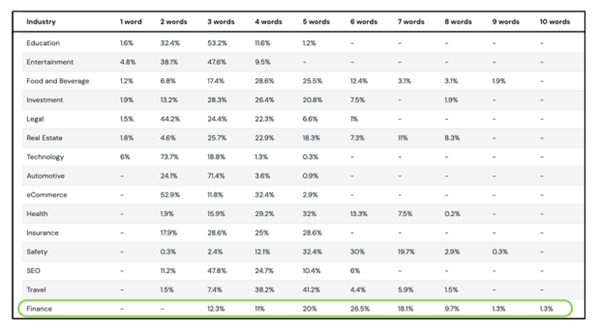
| User queries | Short, keyword-based searches | Long, conversational queries that trigger AI summaries. |
| Visibility tools | Featured snippets and meta description captured attention | Google SGE banking prioritizes structured data and context for AI inclusion. |
| Impact on brand | High traffic volume but mixed intent. | Lower traffic volume, but higher-quality clicks from users closer to financial decisions. |
What is AI SEO for financial services?
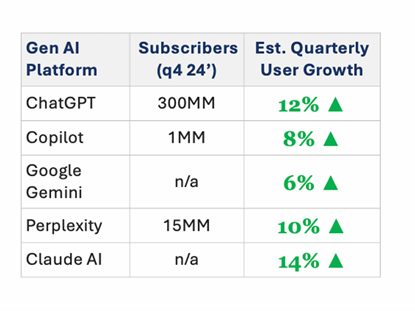
AI SEO for financial services refers to optimizing a firm’s online presence, so it shows not only in traditional search engines like Google but also in AI-driven platforms such as ChatGPT or Gemini. Instead of just focusing on keywords, it looks at how people ask questions and use machine learning to understand intent. It also helps automate parts of content creation, but always within strict rules of financial compliance. In short, it’s about making sure financial brands remain visible and trustworthy in both SERPs and AI-generated search results.
How does Google AIO affect organic traffic for banks?
Google AIO for banks reduces organic traffic for banks by turning many informational queries into zero-click search finance results, which means users get complete answers directly in AI-generated search results without ever visiting a bank’s website. For example, when someone asks about HELOCs or deposit types, Google provides summaries from FAQs or blogs, cutting raw traffic. Transactional queries like loans or credit cards, however, deliver more qualified clicks because users already compare rates or terms in the overview before visiting. The impact depends on AI Overviews eligibility. Banks cited in summaries gain trust and traffic, while those excluded face steep traffic declines.
What makes financial services content eligible for Google AIO?
Financial services content that focuses on education, planning, and definitions instead of transactional or localized data automatically becomes eligible for Google AIO. Educational queries, such as “how does loan amortization work” or “what is a mutual fund” have the highest eligibility. On the other hand, planning-related queries such as “ways to plan for retirement” or “mortgage repayment strategies” are moderately eligible. Then comes real-time queries, such as “bank branches near me” or “real-time stock market indices” rarely qualify. Strong E-E-A-T for financial blogs and structured data for AI search further improve AI Overviews eligibility.
How is generative AI SEO different from traditional SEO for banks?
As compared with traditional SEO, generative AI SEO for banks prioritizes being surfaced in AI-generated search results rather than just ranking on Google’s SERPs. While traditional SEO relied on keywords, backlinks, and featured snippets to capture traffic, generative AI SEO focuses on AI Overviews eligibility, requiring strong authority signals like E-E-A-T for financial blogs and clean structured data for AI search. Informational queries may appear more often in AIO, but they don’t always drive clicks as users often get their answers directly. Transactional queries, however, deliver higher-quality visits.
What schema markup should financial services pages use for AIO?
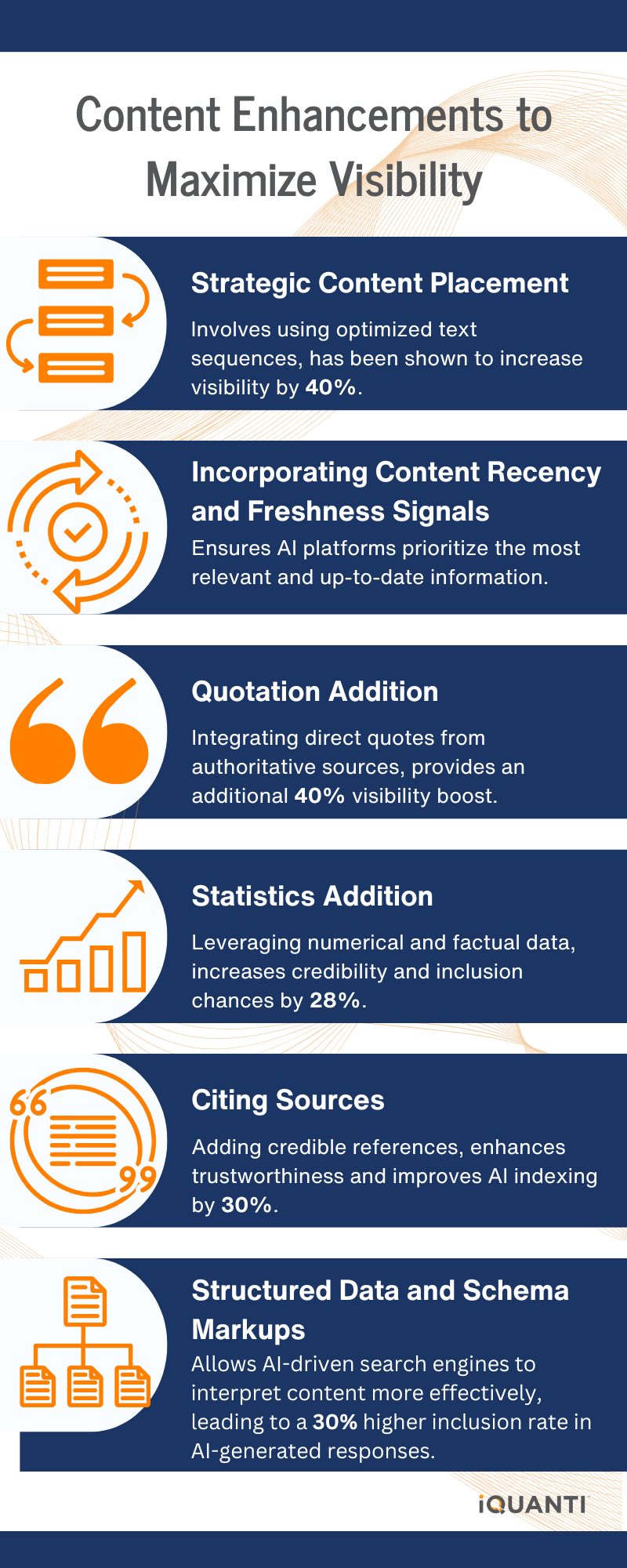
Financial queries fall under Google’s YMYL guidelines, therefore financial services pages should prioritize structured data that clarifies concepts, ensures trust, and highlights actionable facts. The most useful markup for AI Overviews eligibility is FAQ Page, since it gives ready-made questions and answers that can appear in AI-generated search results. For expert articles, use author details to show credibility.
Beyond that, Article schema with author and date fields helps Google confirm freshness and expertise. BreadcrumbList schema, which is a structured way of showing the navigation path of a page, improves crawlability, while HowTo schema that breaks down a process into clear, numbered steps, works well for process-driven content like “how to apply for a personal loan.” FinancialProduct schema that describes financial products including their name, category, fees, and terms is good for product pages covering loans, credit cards, or savings accounts.
How long does it take for AI SEO changes to improve AIO visibility?
Improving AIO visibility with AI SEO for financial services is not instant. It usually takes weeks to months (3-6 months). Google needs time to crawl, process, and test your updates before showing them in AI-generated search results. Changes such as adding structured data for AI search, strengthening E-E-A-T signals, or publishing clear FAQs can start showing impact in around 6–12 weeks, depending on crawl frequency and competition. Banks that align content with AI Overviews eligibility often see faster results, while transactional pages may take a little longer.
Conclusion
Google AI Overviews are not slowing down. As a matter of fact, they are expanding. More queries, more industries, and more users are getting answers directly inside the SERP every month. For BFSI brands, the cost of waiting is measured in lost visibility, declining organic traffic, and competitors getting cited in AI responses instead of you.
The shift is no longer about chasing rankings. It is about becoming the source that AI trusts. This can be achieved through strong E-E-A-T signals, clean structured data, and content that genuinely answers what consumers are asking.
The brands that show up in AI answers tomorrow are making the right content decisions today. Building a solid AI search strategy banking 2026 does not have to be complicated. It just needs to start.