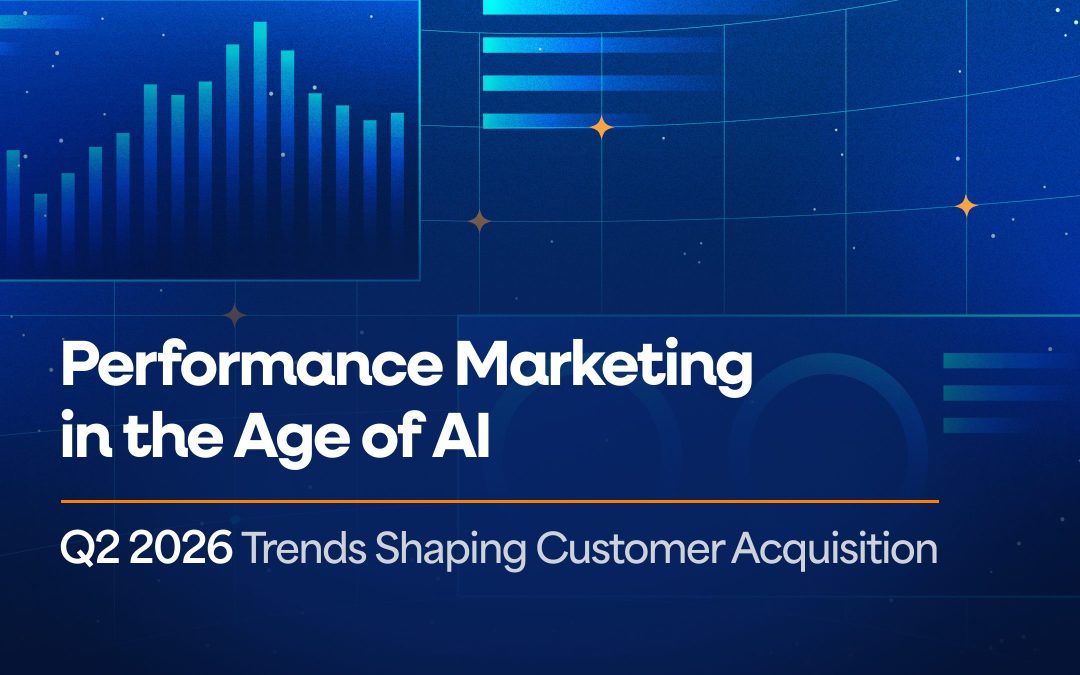
Not long ago, performance marketing was built around a familiar playbook, and that playbook is changing. Digital discovery is becoming increasingly fragmented. Consumers now move seamlessly between search engines, AI assistants, social platforms, and online communities before deciding. That shift is redefining how marketers approach customer acquisition.
Q1 2026 marked a pivotal period for AI-powered search. As highlighted in Search Engine’s Journal, the quarter was defined by rapid advances in AI Overviews, conversational search, AI advertising, and the growing impact of generative AI on search visibility. Q2 builds on these developments as major technology platforms accelerate AI investments and embedded AI more deeply across search, video, social, and conversational experiences.
The AI conversation is no longer about what’s coming next. It’s about what is happening now. Earlier this year , iQuanti explored the rise of generative search, AI Overviews, conversational search, and AI-powered advertising, highlighting how AI was beginning to reshape digital marketing. In Q2, that transformation has accelerated. AI is no longer influencing individual channels. It is redefining the entire customer journey across search, video, social, commerce, and advertising. For marketers, this changes the rules of customer acquisition. Visibility now depends on building a meaningful presence wherever AI helps consumers discover, evaluate, and engage with brands. These are the digital marketing trends shaping the future of AI marketing.
Google Is Setting New Rules for Search Visibility
Google remains central to digital discovery, but AI is shifting Search from a link-based experience to one that delivers direct, contextual answers. As AI Overviews become more prominent and citation formats evolve, visibility increasingly depends on content that Google recognizes as authoritative and easy for AI to interpret. Alphabet reported strong first-quarter growth, driven by Google Search, YouTube, and Cloud, while continuing to expand its AI capabilities through Gemini and AI-powered Search.
The bigger shift, however, is structural. AI Overviews increasingly answer user questions directly, reducing reliance on traditional organic listings while placing greater emphasis on authoritative content. Google’s first Core Update of 2026 reinforced this direction, rewarding brands, government websites, and first-party publishers while reducing visibility for aggregators and intermediary sites.
Google also introduced multiple enhancements to AI citations, including inline links, hover previews, creator attribution, follow-up reading suggestions, and improved AI content extraction. These updates make citations more contextual while increasing the importance of structured, trustworthy information. As AI-generated answers occupy more space within search results, visibility increasingly depends on becoming a source AI chooses to reference rather than simply ranking on page one.
What marketers should do
Prioritize authoritative, first-party content supported by strong entity signals and structured information. Success in AI search increasingly depends on credibility, not rankings alone.
YouTube Is Closing the Gap Between Awareness and Conversion
Video is becoming a more measurable performance channel as AI-powered recommendations, Shoppable TV, and improved Shorts monetization enable consumers to move more seamlessly from content discovery to purchase.
YouTube continued its strong growth, supported by advertising, subscriptions, and record Connected TV watch time. AI-powered recommendations are improving content discovery, while Shoppable TV enables viewers to purchase products directly from connected television experiences. At the same time, improvements in Shorts monetization are bringing short-form video performance closer to long-form content.
These developments reduce the traditional divide between brand awareness and direct response. Consumers can now move from content consumption to purchase within a single ecosystem, creating new opportunities for integrated video strategies.
What marketers should do
Adopt a unified video strategy that combines Shorts, Connected TV, and AI-powered creative to support both brand building and measurable business outcomes.
Meta Is Automating Campaign Execution
Meta’s first quarter demonstrated how AI is changing campaign execution. Strong revenue growth, rising ad impressions, and increased pricing reflect growing advertiser demand, while significant investment in AI infrastructure signals continued automation across the platform.
As AI assumes greater responsibility for targeting, optimization, and campaign delivery, creative quality becomes an increasingly important differentiator. Rather than spending time on manual adjustments, marketers are expected to focus on messaging, customer understanding, and creative effectiveness.
What marketers should do
Use automation to improve execution while investing in creative quality and strategic differentiation. AI can optimize delivery, but it cannot replace compelling brand experiences.
ChatGPT Is Emerging as a New Ad Channel
ChatGPT is evolving beyond a conversational assistant into a platform for discovery, productivity, and commerce by introducing AI-native advertising, expanding self-serve capabilities, and enabling contextual brand experiences. OpenAI has expanded self-serve capabilities while introducing early advertising formats that combine subscriptions, APIs, and native brand integrations into a broader monetization model.
The platform also opened advertising opportunities for approved financial services advertisers, replacing demographic targeting with contextual advertising based on the user’s conversation and intent. This represents a significant shift in how brands can engage consumers during high-intent decision-making moments.
What marketers should do
Prepare for AI-native marketing by strengthening structured brand information, contextual content, and conversational experiences that improve visibility within AI-generated responses.
Pinterest Is Turning Commercial Intent Into Action
Pinterest continues its evolution from an inspiration platform into a full-funnel shopping destination. Revenue surpassed $1 billion, supported by Performance+, AI-powered advertising, and growing commercial intent across its search ecosystem. Approximately half of Pinterest’s billions of monthly searches now carry commercial intent, while Connected TV expansion creates additional performance opportunities.
AI-powered personalization and visual discovery are helping users move more efficiently from inspiration to purchase, giving advertisers stronger lower-funnel performance.
What marketers should do
Leverage Performance+ alongside visual commerce strategies to reach consumers actively researching and planning purchases.
Reddit Is Becoming a High-Intent Performance Platform
Reddit continues to strengthen its position as a performance advertising platform. Reddit Max automates targeting and creative selection, while AI-powered search, Dynamic Product Ads, and commerce integrations are improving conversion performance. Performance-focused advertising now represents most of Reddit’s advertising revenue.
Its community-driven environment provides marketers with access to high-intent audiences seeking authentic recommendations and discussions before making decisions.
What marketers should do
Combine Reddit Max with community-led engagement strategies to reach consumers actively evaluating products and services.
Snapchat Is Improving AI-Powered Performance Marketing
Snapchat returned to revenue growth while strengthening its AI-powered advertising capabilities. Dynamic Product Ads, AI-based intent matching, and improved conversion efficiency are making the platform increasingly attractive for performance marketers. Subscription growth through Snapchat+ and Lens+ also demonstrates Snap’s broader AI investment beyond advertising.
These developments position Snapchat as a stronger option for brands seeking high-attention environments supported by AI-driven optimization.
What marketers should do
Explore Dynamic Product Ads and AI-powered formats to improve campaign efficiency and reach high-intent mobile audiences.
What’s Next for Performance Marketing?
The iQuanti’s Q2 report 2026 makes one trend unmistakably clear. AI is no longer transforming into a single channel. It is reshaping every major digital platform in different ways. Google is redefining search visibility. YouTube is bringing brand awareness and conversion closer together. Meta is automating campaign execution. ChatGPT is creating new opportunities for contextual engagement. Pinterest is strengthening visual commerce. Reddit is transforming community engagement into measurable performance. Snapchat is improving campaign efficiency through AI-powered optimization.
For marketers, success will increasingly depend on understanding the distinct role each platform plays within the customer journey and building strategies that reflect how AI is changing consumer behavior across the digital ecosystem.
Read the full Q2 2026 Performance Marketing Report to explore the latest developments in search, social media, and LLMs.