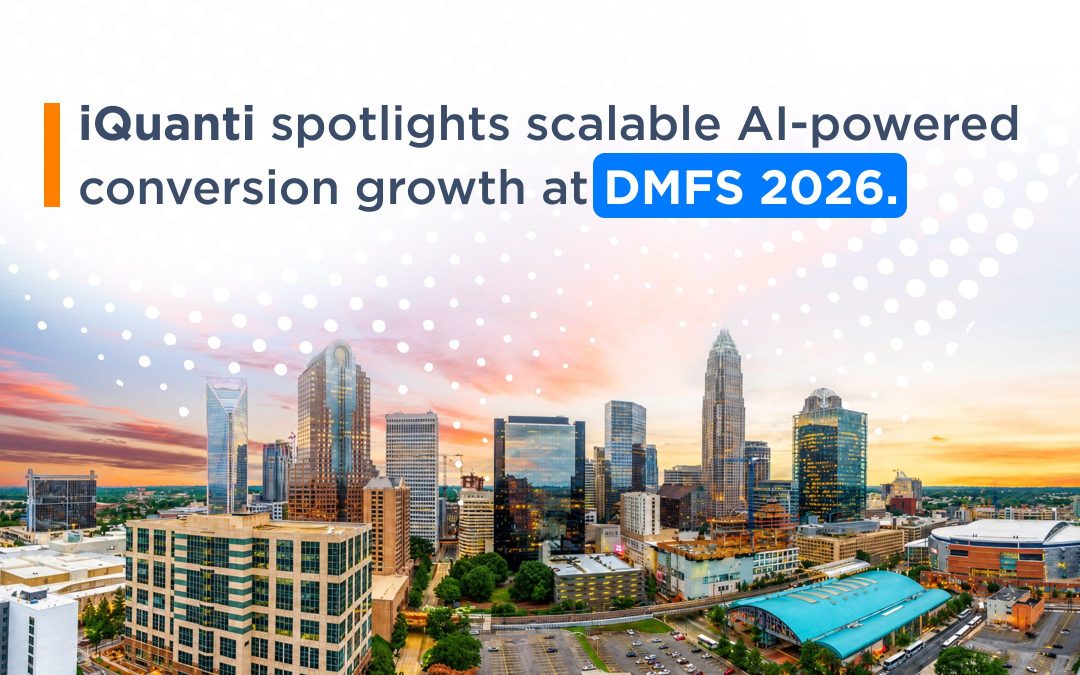
Once again, iQuanti took center stage at the Digital Marketing for Financial Services Summit, and with 18+ years as a growth partner to leading banks and financial institutions, this is more than an event for us. It’s a gathering of the ecosystem we’ve helped shape, focused on the future of customer acquisition, personalization, analytics, and digital experiences in financial services.
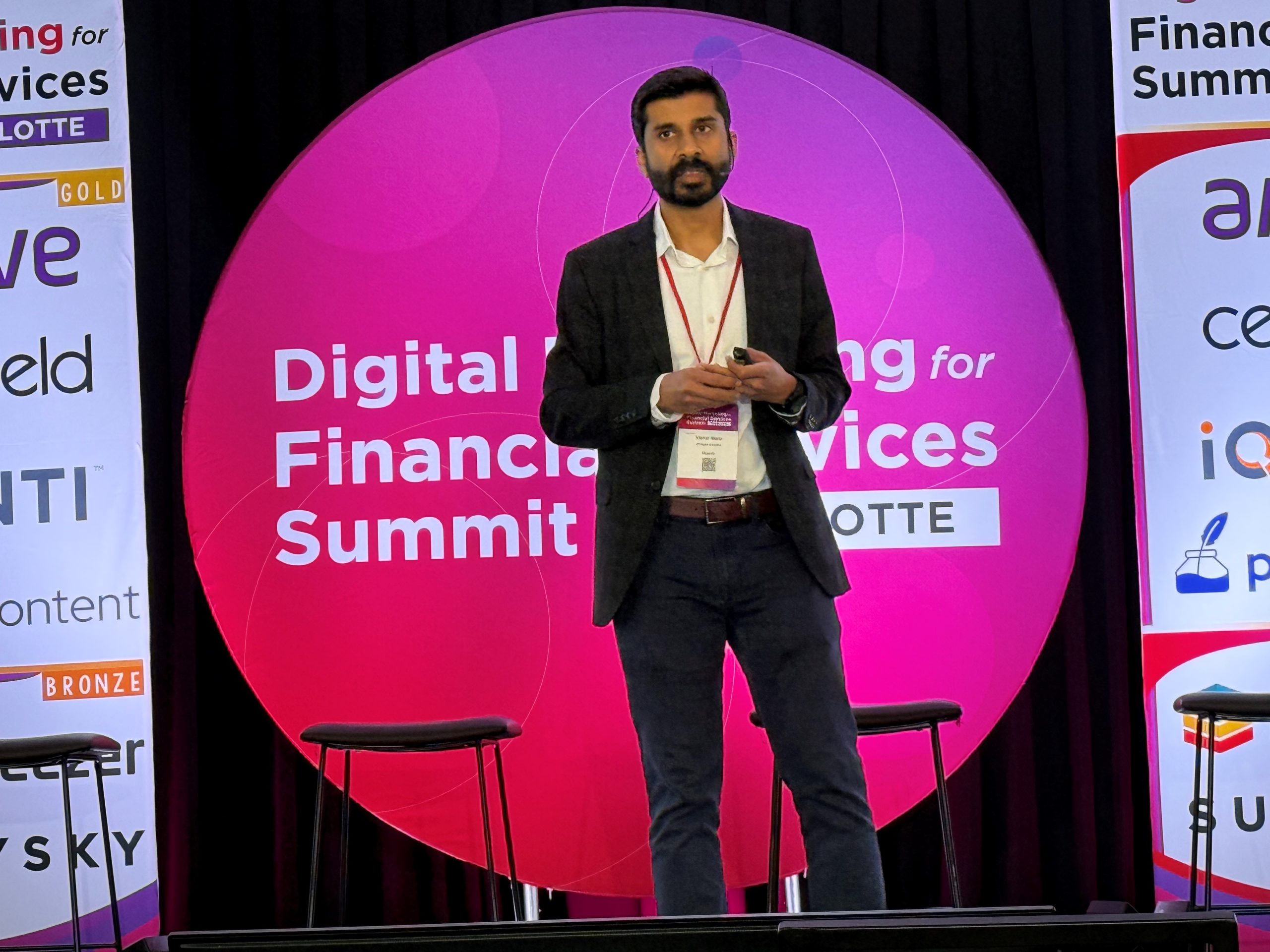
This year, our session, “AI for Website Conversion Performance: Turning Your Financial Services Website into a Revenue Engine,” drew a packed audience of financial services leaders eager to explore how AI is reshaping digital experiences and conversion strategies. The discussion explored one of the most important conversations shaping digital performance today: how AI can help financial brands improve website conversions at speed and scale. The session was led by Vishal Maru, Vice President of Solutions at iQuanti, who shared insights into how financial institutions can transition from ad-hoc AI usage to scalable systems powered by structured intelligence, automation, governance, and human oversight.
Why Financial Services Websites Still Struggle to Convert
One of the biggest themes discussed during the session was the growing gap between traffic acquisition and conversion performance. While brands continue investing heavily in digital acquisition, many financial services websites still struggle with fragmented data, slow manual analysis, delayed execution, and disconnected experimentation workflows. High-intent visitors are reaching websites but often fail to convert because optimization processes remain reactive instead of system-driven.
Building Scalable Systems for AI-led Conversion Optimization
A major focus of the session was iQuanti’s framework for scalable AI systems designed specifically for conversion growth in financial services. Vishal explained how successful AI systems are built around three core pillars: centralized intelligence, execution of workflows, and trust-driven governance. The discussion explored how AI systems become significantly more effective when they are trained in structured business contexts such as customer personas, product positioning, compliance requirements, performance signals, and brand guidelines. Instead of relying on isolated prompts, financial brands need connected systems that can reason with context and continuously improve outcomes.
Another standout moment from the session focused on the growing role of AI agents in digital optimization workflows. Attendees explored how AI-powered systems can support competitive benchmarking, UX analysis, conversion scoring, journey analysis, compliance reviews, and experiment prioritization at scale.
One particularly engaging discussion showcased how compliance-focused AI agents can review marketing copy against UDAAP, Fair Lending, and FTC guidelines before deployment, helping teams accelerate execution while maintaining regulatory alignment. This resonated strongly with attendees navigating the complexity of modern financial services marketing.
Showcasing LEAP and AI-powered UX optimization
A key highlight of the session was the showcase of LEAP, iQuanti’s proprietary platform designed to deliver scalable AI-led digital experience solutions. The presentation demonstrated how LEAP combines campaign data, web analytics, customer research, heatmaps, competitive intelligence, and behavioral insights to identify performance gaps and optimization opportunities. Using more than 100 conversion signals, LEAP helps brands uncover friction points, prioritize testing opportunities, and improve digital experiences through intelligent recommendations and rapid experimentation.
The session also included live examples of conversion scoring analysis, rapid prototyping workflows, AI-generated UX recommendations, landing page optimization strategies, and competitor benchmarking insights. The discussion showed how AI-powered UX optimization can help financial brands improve clarity, strengthen trust signals, increase engagement, and drive stronger conversion outcomes.
Why Competitive Page Intelligence Matters More Than Ever
Another important theme explored during the session was competitive page benchmarking at scale. Maru shared how financial brands can use AI systems to benchmark web and landing pages across UX effectiveness, CTA visibility, product positioning, trust indicators, content hierarchy, and scan-ability. The session demonstrated how AI-driven benchmarking insights can help brands identify gaps faster and accelerate experimentation with greater confidence.
Attendees also explored how competitive intelligence gathered across thousands of financial services URLs can support smarter optimization strategies and better user experiences.
Real Results Shared During the Session
The session also highlighted measurable business outcomes achieved through LEAP-driven optimization initiatives. Examples discussed during the presentation included an average 20% improvement in conversion rates within the first three months, a 103% increase in application start rates for a digital bank, and a 26% improvement in application starts for a national bank’s business checking offer page. These examples reinforced the value of combining structured systems with scalable AI-led conversion optimization strategies.
What Financial Brands Should Do Next
The session concluded with practical recommendations for teams looking to operationalize AI more effectively. Maru encouraged attendees to begin by centralizing customer and brand context, automating repeatable optimization workflows, building specialized AI agents for high-impact tasks, and establishing governance and evaluation systems early. The discussion offered a practical roadmap for organizations looking to scale AI-led conversion optimization solutions while improving performance across digital touchpoints.
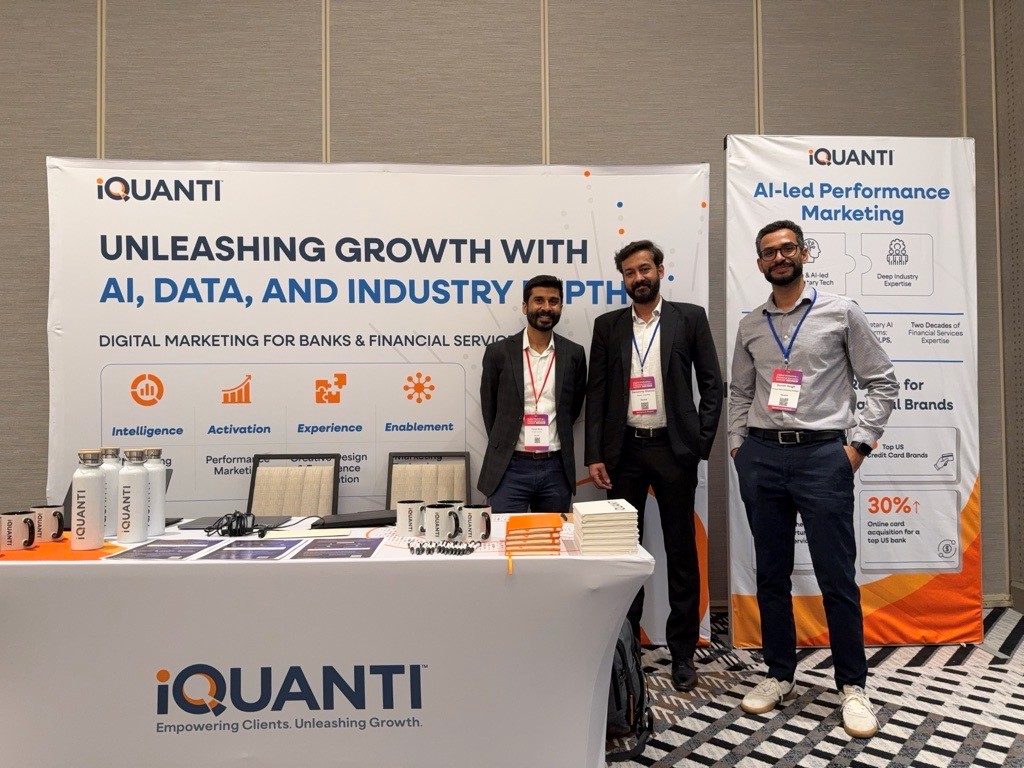
iQuanti team at DMFS Charlotte 2026
iQuanti’s Approach to AI-led Digital Experience Solutions
As AI continues to reshape digital experiences, financial brands need systems that can move beyond isolated experimentation and deliver measurable business impact.
At iQuanti, we are helping organizations improve AI for website conversion performance through scalable intelligence frameworks, automation systems, and continuous optimization strategies built specifically for financial services.
Our complimentary assessment includes a UX scoring report, a competitive benchmarking report, and a prioritized optimization roadmap designed to help brands identify conversion gaps and accelerate performance improvements.
Explore how iQuanti’s AI-led conversion optimization solutions can help transform your digital experience into a revenue engine. Let’s connect.