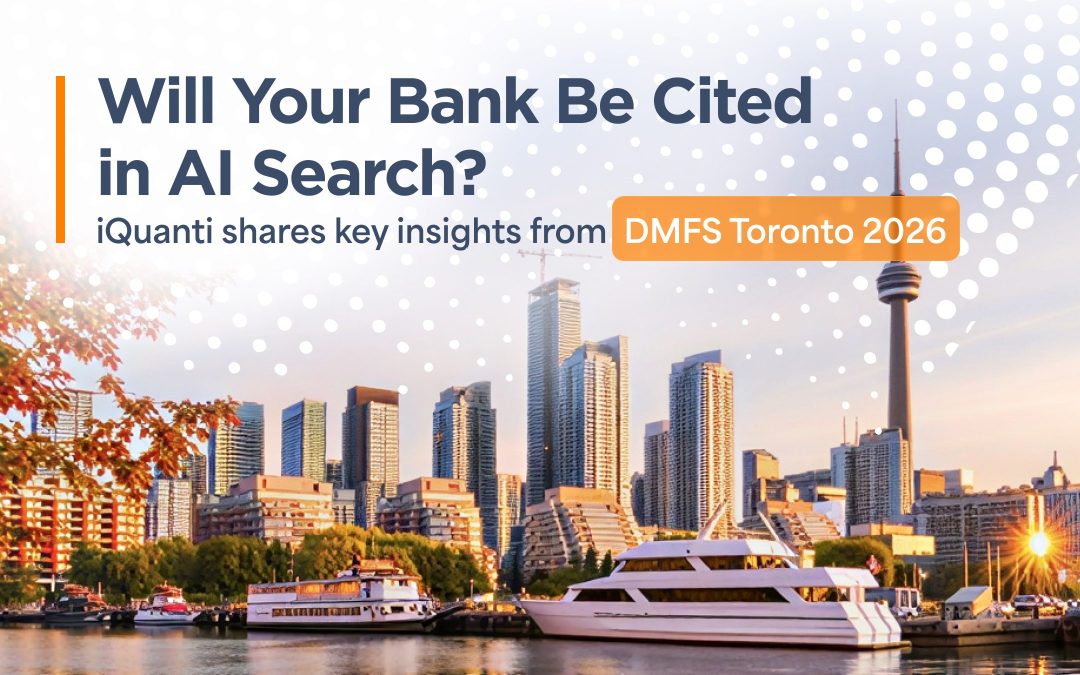
iQuanti joined financial services leaders at DMFS Toronto 2026 to discuss one of the most important shifts reshaping digital marketing today: the rise of AI-generated answers and what they mean for brand visibility.
In the session, “Will Your Bank Be Cited in AI? How Brands Win Visibility, Citation, and Trust in the Age of AI Search,” Wayne Cichanski, Vice President of Search & Site Experience at iQuanti, explored how AI is changing the way consumers discover, evaluate, and engage with financial institutions.
As AI platforms increasingly become a source of financial information, the discussion focused on a critical challenge facing marketers: how brands can remain visible when consumers receive answers instead of search results.
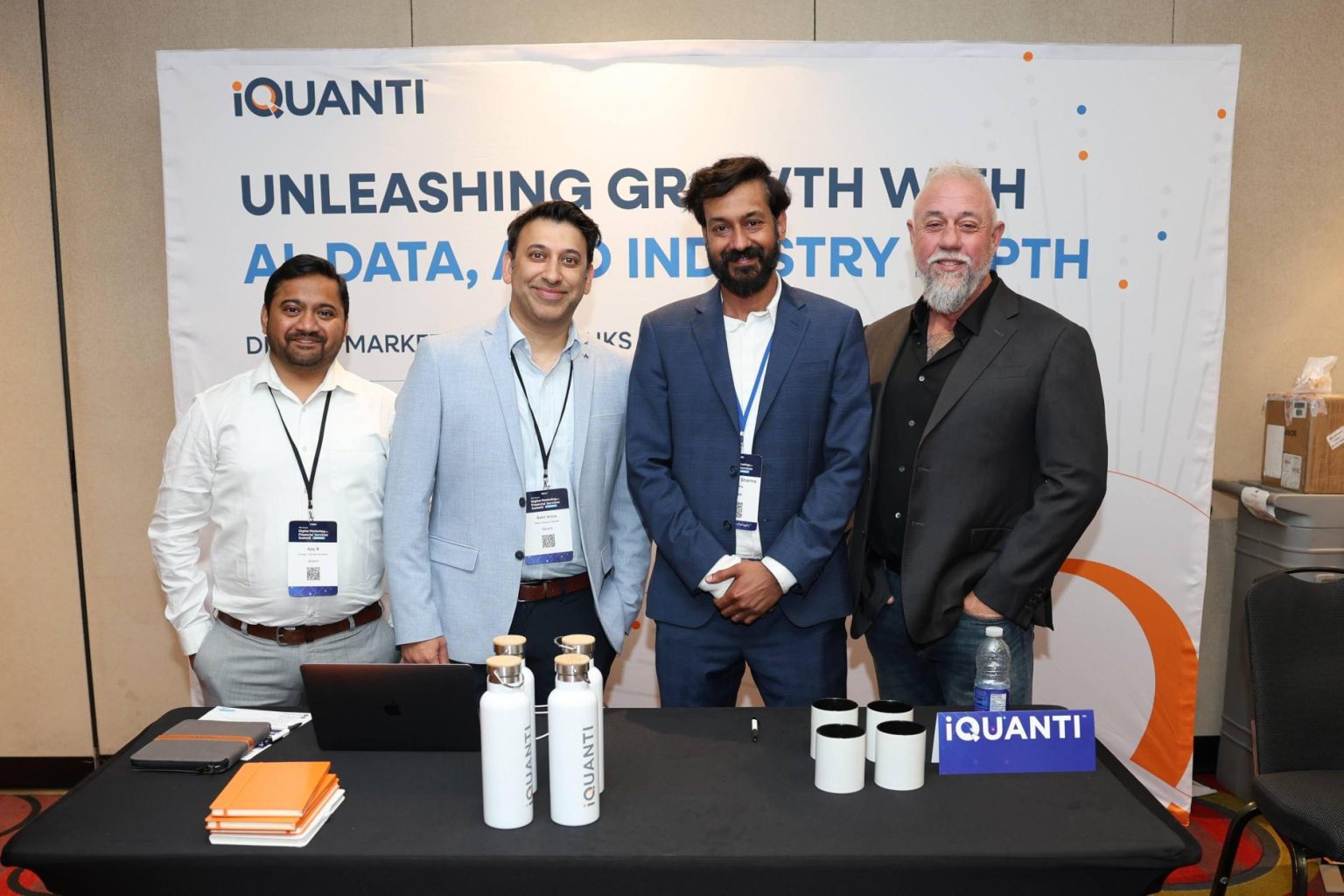
iQuanti team members at the iQuanti booth at DMFS Toronto
The First Financial Conversation Is Moving to AI
Consumers are rapidly embracing AI platforms to research financial products, compare providers, understand complex topics, and make informed decisions.
Questions about mortgages, credit cards, credit scores, savings accounts, debt management, and investing are increasingly being asked directly to AI assistants. For financial institutions, this represents a significant shift in how discovery occurs.
Traditionally, brands competed for visibility through rankings on search engine results pages. AI platforms operate differently. Instead of presenting multiple options, they generate a synthesized answer based on a limited number of trusted sources.
As discussed during the session, the challenge is no longer simply ranking well in search. The challenge is becoming one of the sources that influences the answer itself.
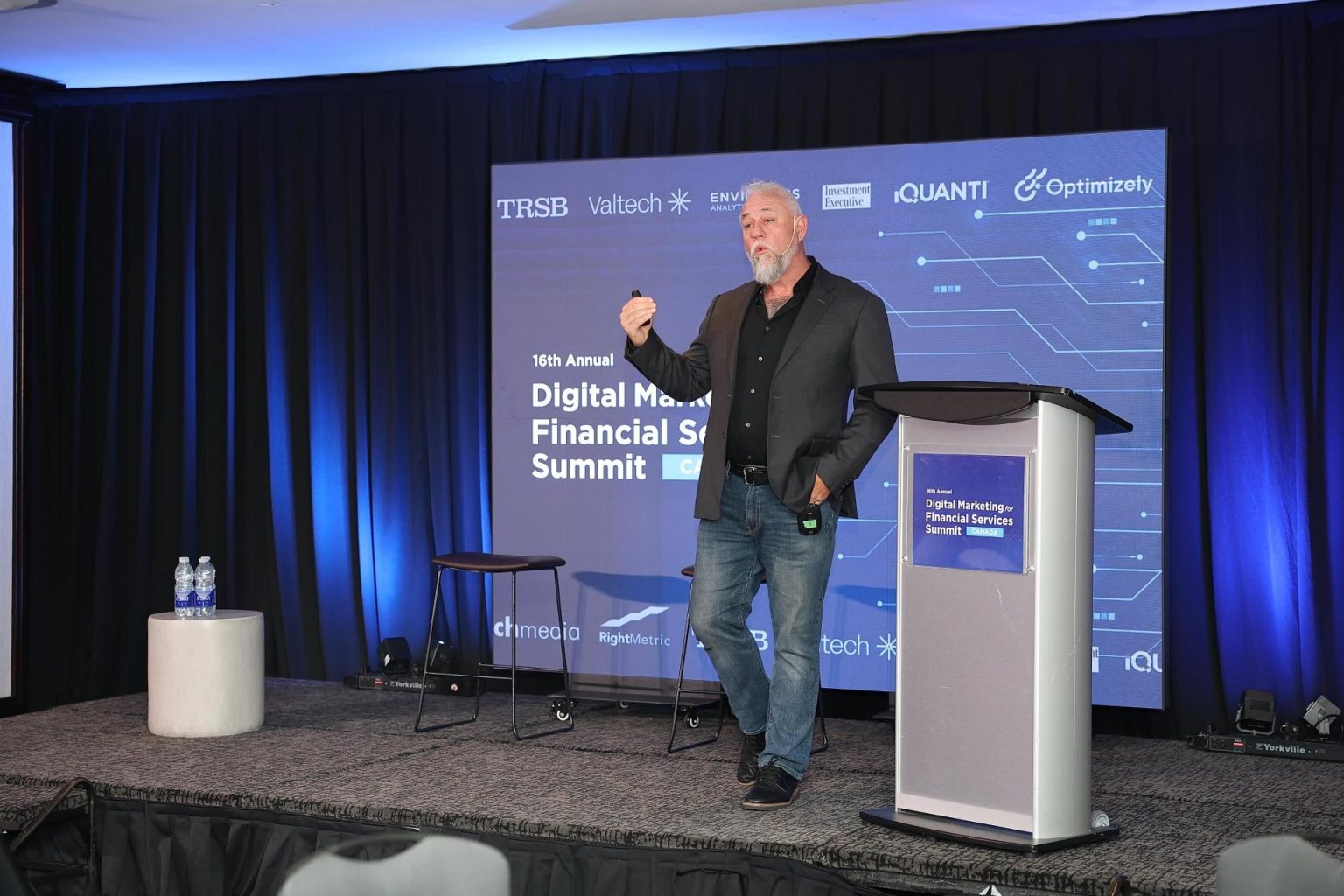
Wayne sharing insights on the factors that influence citations in AI search
Why GEO Is More Than SEO for AI
A major theme throughout the presentation was the distinction between traditional SEO and Generative Engine Optimization (GEO).
While SEO remains essential, AI systems retrieve, evaluate, and synthesize information differently from search engines. Success depends on more than keywords, rankings, and website authority.
The discussion highlighted how AI visibility is influenced by a broader set of signals, including authority, entity recognition, content structure, consistency, and trusted third-party references.
As AI adoption continues to grow, financial institutions need strategies designed specifically for how large language models discover and evaluate information.
Understanding How AI Chooses What Gets Cited
One of the most insightful sections of the session focused on how AI-generated answers are constructed.
Wayne introduced a four-stage framework that explains how information moves from discovery to citation.
The process begins with query understanding, where AI systems interpret user intent and context. Content is then retrieved from a broad set of potential sources before being filtered and re-ranked based on relevance, authority, trustworthiness, and freshness. Only a small number of sources ultimately contribute to the final synthesized answer.
This creates a highly competitive environment where only a fraction of available content influences AI-generated responses.
For financial brands, understanding this process is critical to improving visibility within AI-driven experiences.
The Six Signals That Influence AI Citations
The session also introduced a framework outlining the factors that most influence whether content is selected and cited by AI systems.
- Coverage Depth
AI systems favor content that addresses the complete scope of a topic, including related questions, edge cases, and likely follow-up queries. - Authority
Strong expertise and credibility continue to play an important role in determining visibility. - Brand Entity Strength
AI systems evaluate brands as entities. Recognition across trusted sources, branded search demand, and industry mentions all contribute to stronger entity authority. - Content Consistency
Consistent messaging across owned and earned channels helps reinforce trust and credibility. - Extractability
Content must be structured in a way that enables AI systems to easily identify, interpret, and reuse information. - Agent Readiness
As AI agents become more capable, organizations must prepare content and digital experiences for machine-driven discovery, retrieval, and action.
Together, these signals provide a roadmap for building content and digital ecosystems that are more likely to earn citations in AI-generated answers.
Why Entity Authority Matters More Than Ever
Another key takeaway from the session was the growing importance of entity authority.
For years, marketers have focused on domain authority and page-level optimization. AI systems take a broader view. They evaluate how consistently a brand appears across the web, how often it is referenced by trusted sources, and whether it is recognized as an authority within a specific topic area.
The discussion highlighted four key components of entity authority:
- Strong domain and page authority foundations
- Brand recognition supported by digital PR and earned media
- Consistent messaging across digital channels
- Trusted third-party mentions and citations
For financial institutions, this means visibility extends beyond the corporate website. Building authority now requires a coordinated approach across content, PR, brand, and search teams.

Wayne addressing audience questions during the live Q&A session
Building Content for AI Search Visibility
The session also explored how content strategies must evolve for AI-driven discovery.
Rather than creating isolated keyword-focused pages, financial brands should build comprehensive topic resources designed to answer the full range of consumer questions.
Successful AI-ready content includes:
- Direct answers to core questions
- Coverage of related topics and edge cases
- Responses to implied customer concerns
- Answers to likely follow-up questions
This approach aligns more closely with how AI systems retrieve and synthesize information while also supporting traditional search performance.
Measuring What Matters in AI Search
One of the key discussions during the session focused on measurement and attribution in an AI-driven environment. As consumers increasingly rely on AI-generated answers to research and evaluate financial products, traditional metrics alone are no longer sufficient. Wayne highlighted the need to track citation share, prompt coverage, AI-assisted conversions, branded search lift, share of voice across AI platforms, and competitor co-mention frequency. Together, these metrics help organizations understand visibility, influence, competitive positioning, and the business impact of AI-driven discovery and engagement.
What Financial Brands Should Do Next
The session concluded with practical recommendations for organizations looking to strengthen their AI visibility.
Financial institutions should begin by understanding the questions consumers are asking AI platforms, identifying the sources that AI systems trust within key topic areas, strengthening entity authority through third-party mentions and digital PR, and developing comprehensive content designed to satisfy the full scope of user intent.
As AI continues to reshape how consumers discover information, brands that invest early in visibility, authority, and trust will be better positioned to influence the answers that shape future customer decisions.
iQuanti’s Approach to GEO and AI Visibility
AI search is creating a new layer between brands and consumers. Success increasingly depends on being retrieved, trusted, and cited within AI-generated answers.
At iQuanti, we help financial institutions improve AI visibility through GEO strategies focused on content depth, entity authority, citation growth, and measurement frameworks designed for AI-driven discovery. As the search landscape continues to evolve, we remain focused on helping brands build visibility, trust, and influence wherever customer journeys begin
To know more about iQuanti’s GEO offering and AI-native growth marketing solutions, get in touch.