Ramanuj Paul, Director of Paid Solutions, shares his views on the evolving role of paid media in an AI-driven search landscape.
Paid search is becoming less predictable and less visible. AI-driven results are reshaping where ads appear and how they compete, reducing the impact of keyword-led strategies. As intent and context take precedence, auctions are driven by signals beyond bids and match types. With users shifting to conversational queries, traditional placements are losing prominence. Success now depends on aligning with intent, improving content depth, and adapting to how platforms prioritize and surface brands.
The biggest difference in AI-powered search is how people ask questions. Traditional search queries were short and direct. A user might type “best savings account” or “mortgage rates.” Search queries have become more specific, and context driven. Users now provide more details in their questions to receive tailored responses.
AI platforms understand the context behind these questions and provide a direct response that combines information from multiple sources. This approach simplifies the research process for users. Instead of visiting several websites, people can receive a single answer that summarizes their options.
Financial services brands now face earlier decision-making moments. AI-generated responses often define initial impressions, influencing how customers evaluate products, compare providers, and narrow choices before engaging further.
The Challenge of Fewer Clicks
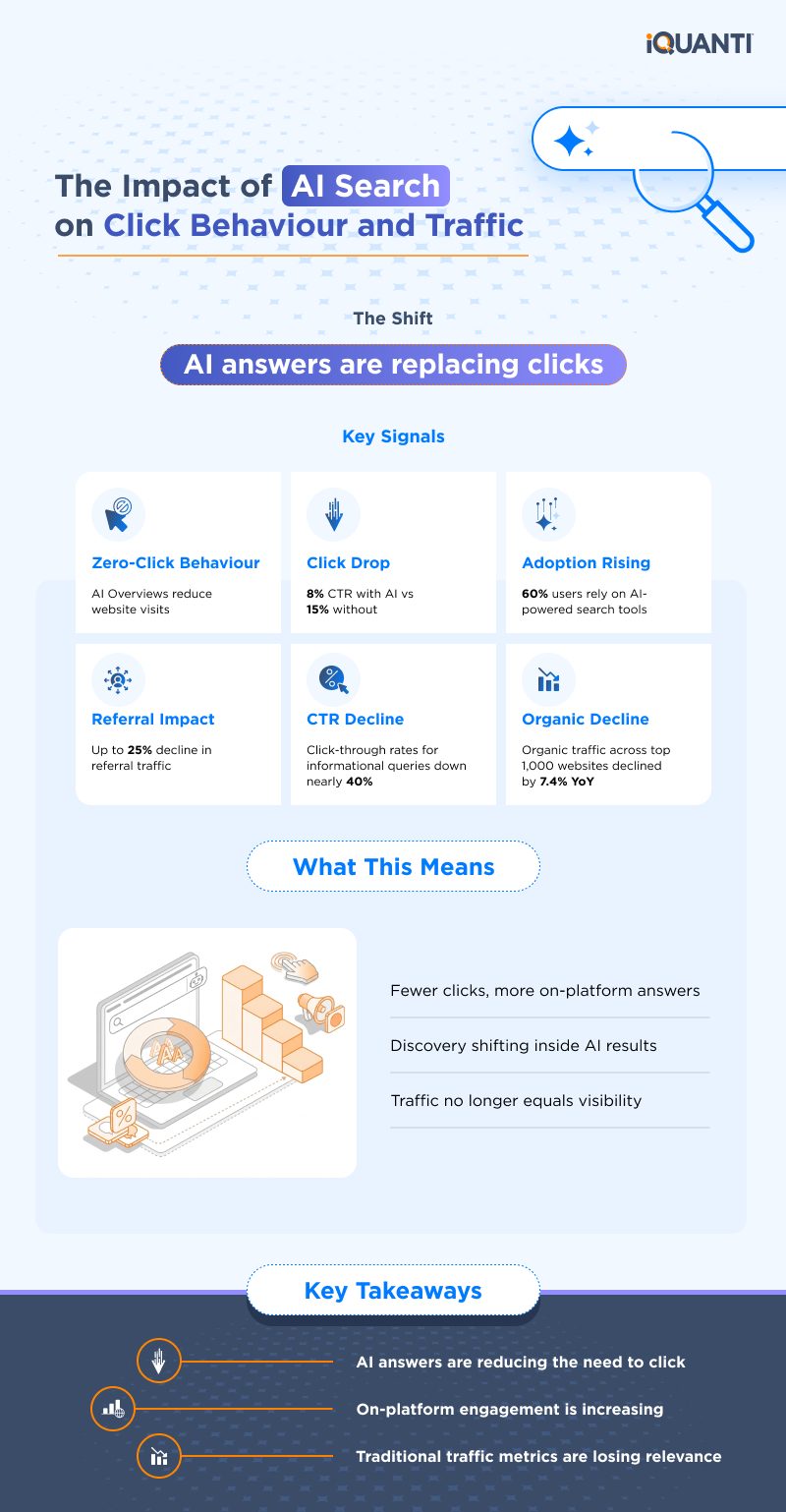
AI search is fundamentally changing user behavior through zero-click interactions. Information is delivered instantly within results, removing the need to visit external sites. This makes traditional metrics insufficient, pushing marketers to redefine how they track performance and engagement.
AI-generated answers are shaping customer decisions without requiring website visits. As users ask fewer queries and get faster responses, ad inventory is tightening, increasing competition and putting upward pressure on costs for advertisers.
What This Means for Paid Advertising
The shift toward AI search requires a fresh approach to paid media. In the past, campaigns were often organized around specific keyword groups. Performance was optimized by adjusting bids and refining keyword lists.
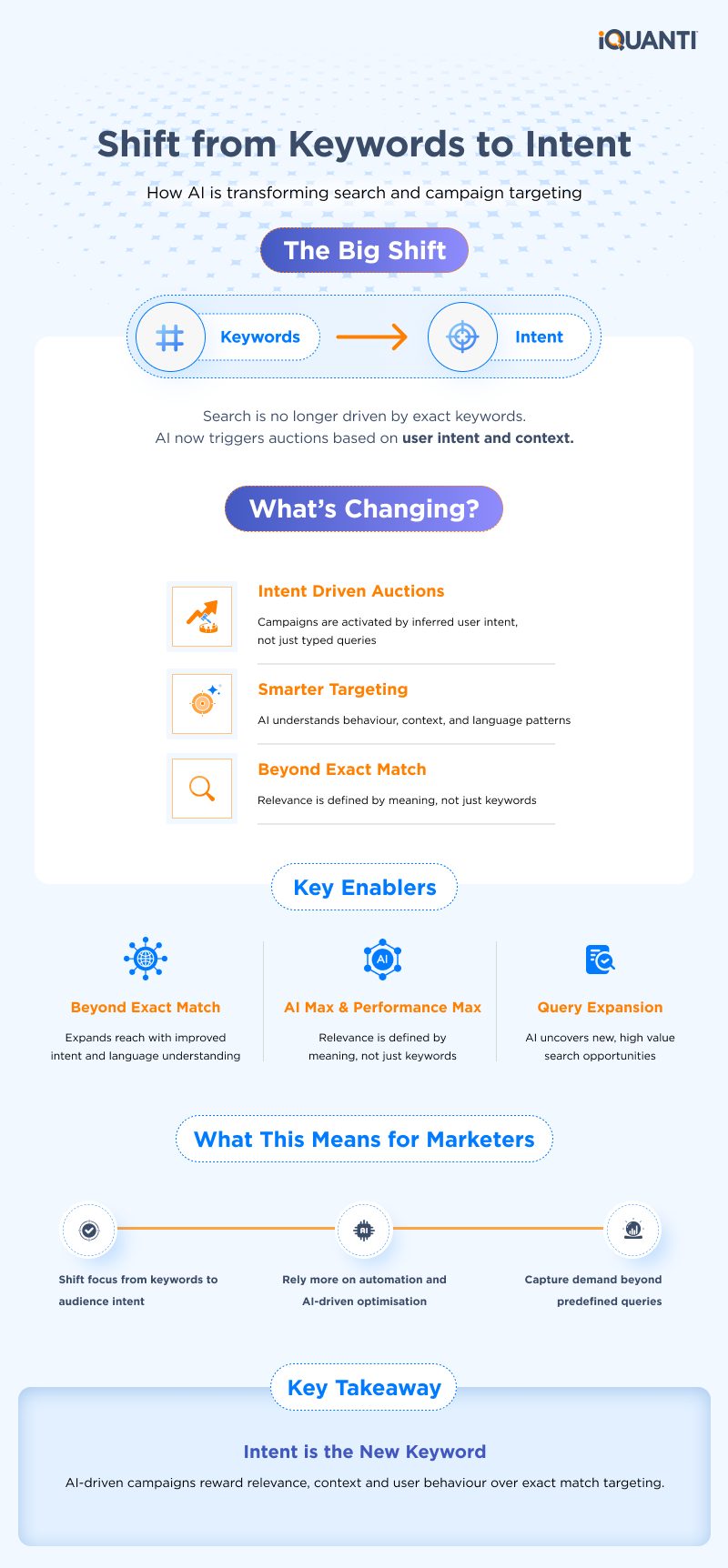
Now, platforms increasingly focus on understanding intent rather than matching exact keywords. Advertisers should think more about the questions users are asking and the problems they want to solve. Campaigns that focus on broader themes and customer needs are more likely to remain relevant in AI-powered environments. It is also becoming important to experiment with flexible targeting strategies. Technologies such as broad keyword matching allow search platforms to interpret conversational queries and connect them with relevant ads.
Automation and machine learning are playing a larger role. Many advertising systems now rely on AI to determine when and where ads should appear. Marketers who adopt these tools early can gain insights that improve campaign performance. To summarize it all, here are the key takeaways:
Advertising Opportunities in AI Platforms
AI-driven search is reshaping how brands compete for visibility, making it essential to understand how competitors appear across major LLM platforms. Rising cost pressures are already visible, with search and performance marketing costs increasing by 25-40% as AI Overviews compress the traditional funnel. At the same time, insurers are seeing higher impressions but declining click through rates, leading to increased cost per acquisition.
AI interfaces are also reducing paid visibility. According to reports on Search Engine Land, up to 30% of ads are displaced when AI Overviews appear, with financial services experiencing 20-30% loss in ad exposure. Alongside this, regulatory scrutiny is intensifying. Brands must now treat AI-generated summaries as regulated content, ensuring accuracy, compliance, and clear disclosures. To adapt, BFSI organizations are diversifying investments into co-branded content, influencer ecosystems, and community driven platforms where AI models increasingly source answers.
While platforms like ChatGPT, Google AI Overviews, Gemini, Copilot, Perplexity, and Claude are rapidly scaling in user adoption, advertising opportunities remain fragmented.
Some platforms are beginning to test ad integrations, while others remain largely ad free, creating an uneven and evolving landscape for BFSI marketers. This shift is redefining how and where brands gain visibility in AI-driven discovery environments. These visibility shifts influence which brands users encounter when they ask AI tools for recommendations, comparisons or financial guidance.
- Deep-dive competitive set: Track how competitors’ traffic, citations and visibility are shifting as AI search and LLM platforms reshape digital discovery.
- Platform-level LLM audit: Apply a structured methodology to analyze how your brand and competitors rank across key LLMs, including frequency and prominence of brand mentions.
- Identify opportunities and gaps: Map the emerging AI shelf to uncover where competitors dominate and where your brand can strengthen visibility across AI-driven search experiences.
Advertising in banking and financial services is undergoing a structural shift. Traditional search models are being replaced by AI-led systems, where intent, relevance, and platform decisioning determine which brands are seen, reshaping visibility, competition, and performance outcomes.
Measuring Success in a New Environment
Search advertising is rapidly moving from keywords to intent, driven by AI-powered campaign systems. Instead of relying only on exact keywords, modern search platforms now analyze user behavior, context and language patterns to understand what a user actually wants.
Preparing for an AI-Driven Future
Financial institutions should begin preparing for these changes now. One of the most important steps is improving how information is structured on websites. AI systems rely on clear and well-organized content to understand a brand’s expertise and offerings.
Content that answers common questions in simple language can also increase the chances of being referenced in AI responses. In addition, brands should expand their presence across trusted digital platforms. AI systems often draw insights from a wide range of sources, including industry publications, community discussions, and expert commentary.
Building credibility across these channels can improve visibility in AI-generated results. Finally, marketers should stay alert to new advertising opportunities. As AI platforms continue testing ad formats, early experimentation can provide valuable learning and competitive advantages.
The Next Stage of Digital Marketing
Search marketing is evolving faster than ever before. Generative AI is reshaping how people gather information and make decisions online.
For financial brands, the goal is no longer just appearing in a list of search results. The goal is to become part of the answers people receive when they ask important financial questions.
Organizations that adapt early by refining their content strategies, experimenting with new advertising formats, and updating their measurement frameworks will be better positioned to succeed. The way people search is changing. The brands that understand this shift will shape the next era of digital marketing.
This article is based on insights from our webinar, “From Search Ads to AI Answers: The Future of Paid Media for Financial Brands.” Watch the full webinar to explore the complete discussion and key strategies.
To explore how our paid media solutions are evolving for the AI search era, get in touch.