AI-generated answers are reshaping financial discovery by connecting authoritative publishers with AI-driven brand perception.
The way consumers evaluate banking brands has changed. Instead of reviewing multiple blue links, users now ask detailed questions and expect one clear, consolidated answer. They want comparisons between savings accounts, breakdowns of credit card benefits, explanations of APR calculations, and clarity on loan eligibility. Increasingly, those answers are coming from generative AI tools like ChatGPT. This shift is redefining how trust is formed in financial services.
Traditional search rewarded ranking position. AI search rewards referenced authority. When ChatGPT generates a banking answer, it does not invent information. It synthesizes signals from credible, high-traffic, and well-structured sources. If a brand is consistently present within those trusted ecosystems, it is more likely to be cited or mentioned. If it is absent, it becomes invisible in AI-generated discovery.
Today’s consumer journey spans Google, financial media sites, comparison platforms, and AI systems such as ChatGPT, Gemini, and Perplexity. Users move seamlessly between them. They may begin with a search engine, validate with authoritative publishers, and rely on AI for final synthesis. In this ecosystem, authority compounds across platforms. In the AI era, credibility is not claimed. It is inferred from citation patterns.
The Scale and Citation Concentration of ChatGPT
ChatGPT operates at a massive scale, processing billions of prompts and serving hundreds of millions of users weekly. Its influence in shaping financial discovery continues to expand as AI-driven search traffic accelerates.
Yet scale alone does not determine which brands appear. Citation data reveal a strong concentration. Approximately 50 percent of total banking citations originate from roughly 75 domains with monthly traffic between one and twenty million visits. A relatively small cluster of publishers disproportionately shapes AI responses.
Domain authority further amplifies this concentration. Around 62 percent of citation share comes from the top 100 domains ranked by Domain Rating across banking lines of business. In fact, domains with a Domain Rating above 80 demonstrate a 60 percent higher likelihood of being cited in AI-generated banking responses.
These patterns underscore a structural reality. ChatGPT leans heavily on highly rated, recognised publishers when generating financial answers. Inclusion within these ecosystems materially increases a brand’s probability of mention.
The question for banking brands is not whether they rank. It is whether they are embedded within trusted publisher networks.
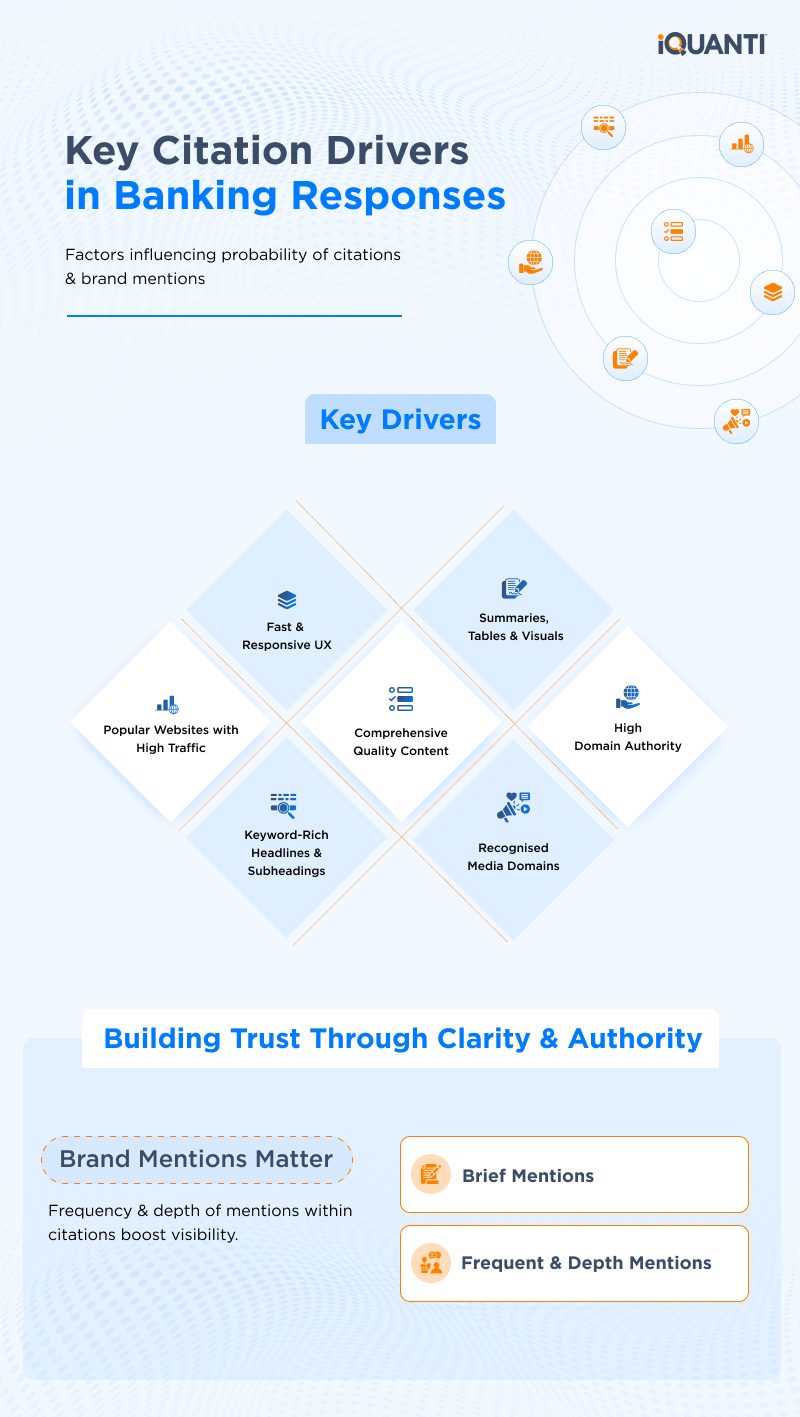
These signals collectively strengthen a brand’s eligibility for inclusion. Structured clarity, technical performance, and publisher credibility all contribute to the formation of trust in AI.
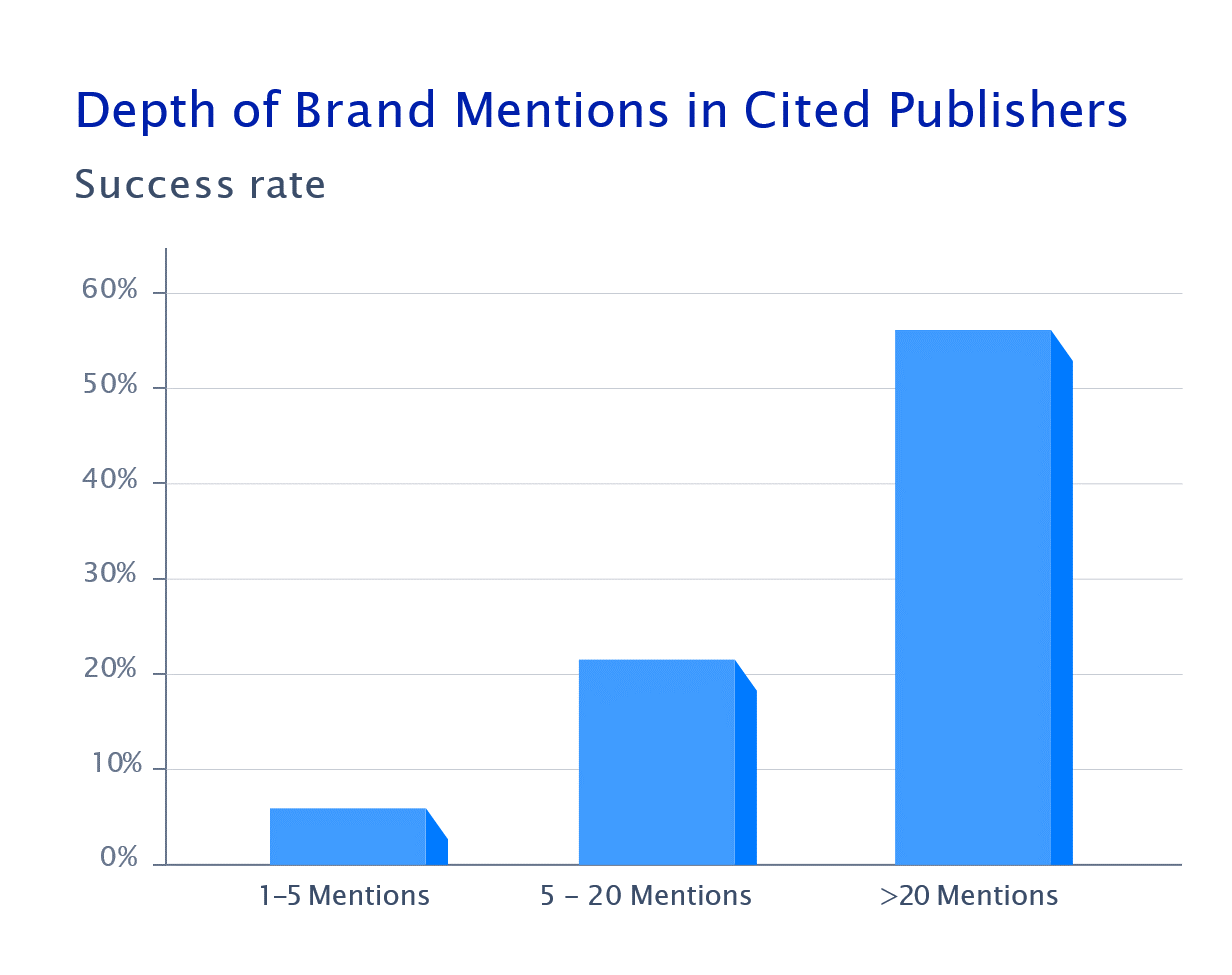
However, citations alone do not tell the full story. The depth and frequency of brand mentions within those citations significantly influence visibility.
Depth of Brand Mentions and AI Visibility
The data show a clear correlation between broader publisher coverage and increased AI mentions. Brands referenced in more than twenty instances across the cited publishers demonstrate dramatically higher visibility in AI-generated answers than those with minimal presence. As mentioned, depth increases from one to five references, from five to twenty, and beyond twenty; overall success rates rise sharply.
This pattern reinforces a powerful insight. Authority is cumulative. Brands that appear widely across trusted sources are more likely to be recognised and cited by ChatGPT and other large language models.
Brand Website Citations as Authority Signals
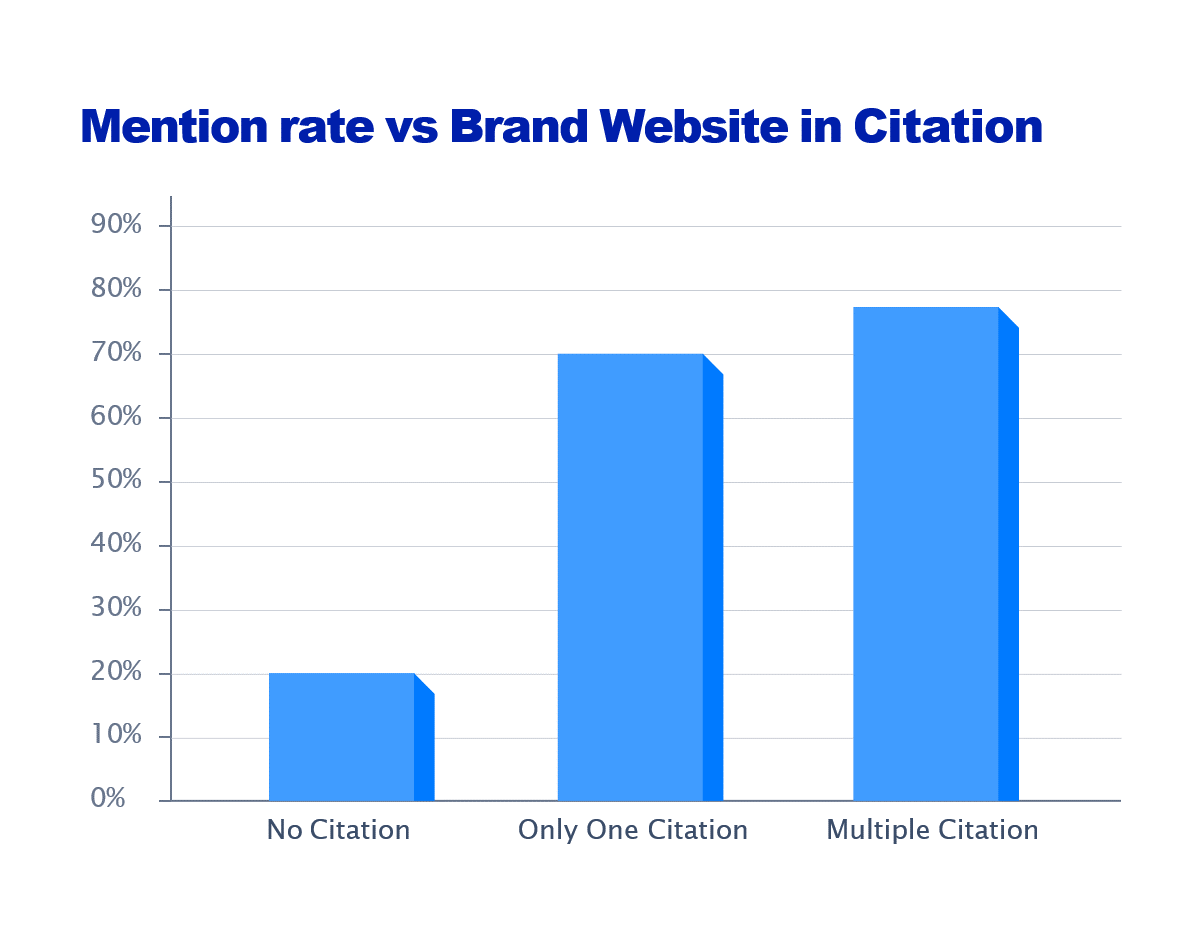
Direct references to a brand’s own website significantly increase overall mention rates. When an official domain appears in one or more citations, ChatGPT interprets this as a strong authority signal. The correlation between website inclusion and AI visibility is substantial across leading banking institutions.
Even a single citation referencing a brand’s official website can meaningfully increase overall mentions. Multiple citations amplify this effect further. A direct website presence reinforces authenticity and strengthens AI’s confidence in the brand’s credibility.
Third-Party Validation and Independent Credibility
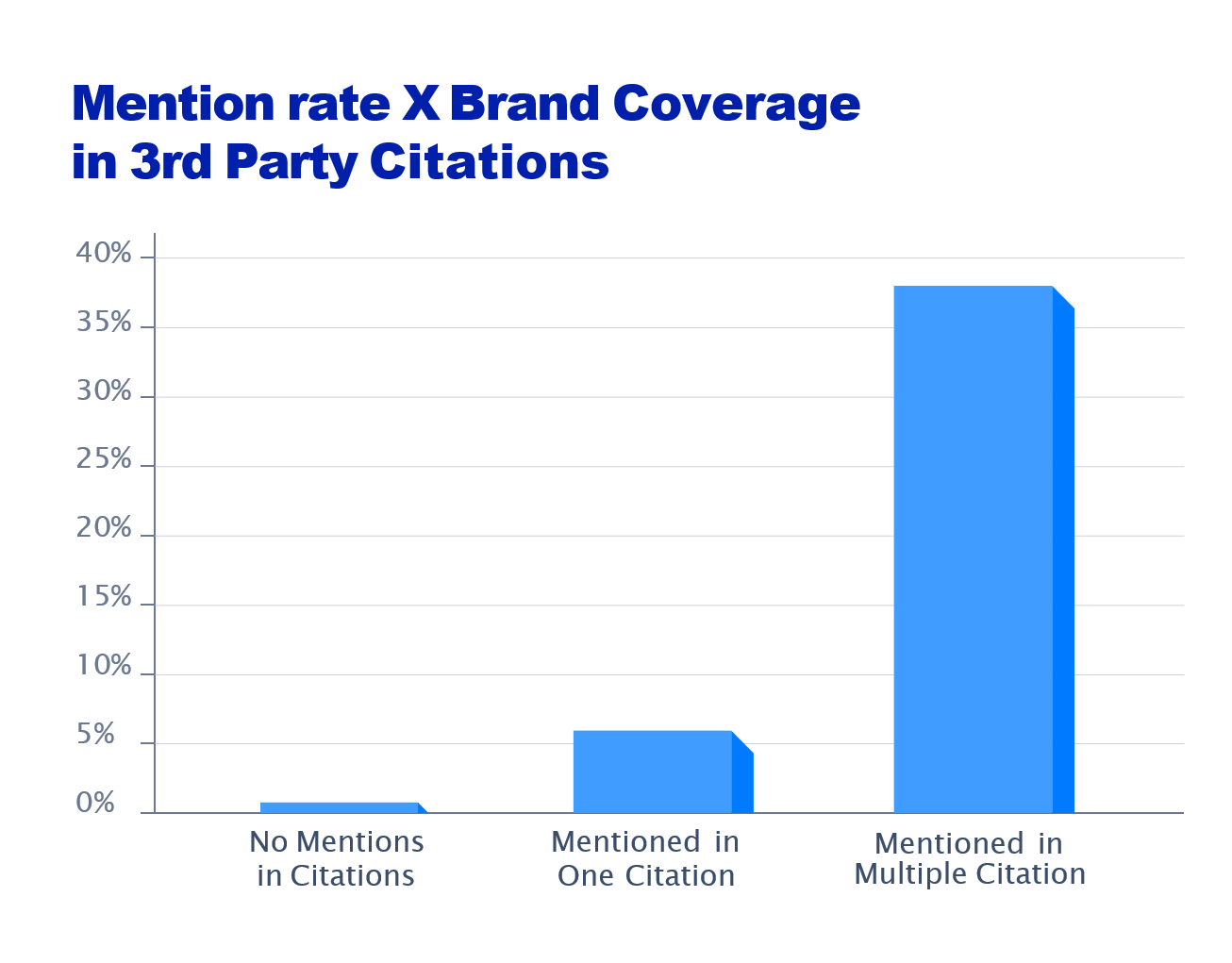
Independent publisher coverage also plays a decisive role. When a banking brand is cited in one or more third-party sources, mentions increase notably. Third-party validation signals credibility to AI systems, acting as external confirmation of expertise and relevance.
Brands covered across multiple third-party citations experience even greater uplift in AI-generated mentions. The breadth of coverage across recognised publishers directly correlates with higher inclusion frequency in conversational responses.
Together, these findings reveal a layered trust model. High-authority domains drive citation probability. Brand website references reinforce authenticity. Third-party coverage amplifies validation. Depth of publisher presence compounds visibility.
Beyond Search Rankings: The Emergence of Generative Engine Optimization
Traditional SEO remains foundational, but it is no longer sufficient. Generative Engine Optimization requires strategic alignment with authoritative publisher ecosystems. Banking brands must ensure structured content, strong headline alignment, semantic depth, and technical performance.
Equally important is expanding presence across high-DR publishers with strong traffic baselines. Authority signals must extend beyond owned properties into recognised financial media networks.
AI systems synthesise trust from patterns across these ecosystems. Brands that appear consistently within trusted domains are disproportionately represented in AI-generated banking responses.
Why This Matters for Financial Institutions
Banking decisions are rooted in trust. Consumers evaluating financial products seek reassurance before committing to accounts, loans, or investments. When AI tools serve as intermediaries in that decision-making process, the brands cited in those answers gain significant influence.
Absence from authoritative ecosystems translates into absence from AI narratives. Presence across credible publishers increases the probability of inclusion. Structured content and third-party validation strengthen representation.
In an environment where AI-driven discovery continues to accelerate, banking brands must move beyond isolated SEO tactics. Visibility now depends on recognised authority, validated presence, and consistent citation depth. ChatGPT is not simply answering questions. It is constructing trust hierarchies based on authoritative ecosystems.
For banking institutions, AI visibility is no longer optional. It is a strategic layer of digital credibility. Brands that invest in authoritative publisher networks, structured expertise, and sustained validation today will shape how AI systems describe them tomorrow.
Ready to strengthen your authority across AI-driven banking discovery? Let’s build your generative visibility strategy.